
Active Warrants in Washington County
A warrant is a court order. Judges issue warrants, and law enforcement carries them out. In Washington County, warrant information is split across several systems. It can appear in the court case record and calendar, in the sheriff's jail and custody records, and in law enforcement databases that may not be fully public. Because of that split, no single free list shows every active warrant in the county. A person with a possible warrant should not rely only on third-party sites, which are often wrong or out of date.
The official paths are the Washington County Sheriff's Office, the Oregon Judicial Department case record and calendar, and direct contact with the court or an attorney. When a warrant leads to a booking, it can show up on the sheriff custody list, which is generally updated every two hours. Court entries like "warrant ordered," "warrant issued," or "warrant recalled" can appear in the register of actions for a case. So the same warrant may leave a trail in more than one place.
Search warrants in active investigations are often sealed, so they will not show at all.
Types of Warrants in Washington County
Not all warrants are the same. They are issued for different reasons and follow different rules. Some come straight from a judge, while others follow a charge or a violation. The list below covers the common types seen in county and state systems.
- Arrest warrant - issued after probable cause or the charging process, authorizing police to take a named person into custody.
- Bench warrant - issued by a judge, most often for a missed court date or a violation of a court order.
- Search warrant - authorizes a search of a place or item, and it is often sealed during an active investigation.
- Probation violation warrant - tied to a claimed violation of supervision terms after a conviction.
- Fugitive warrant or hold - an out-of-county or out-of-state hold for a person wanted elsewhere.
A bench warrant is the type most people run into, since it can follow something as simple as a missed hearing. Failure-to-appear entries often sit right beside the warrant note in the court file.
How to Search Washington County Warrants
There is no single public "warrant lookup" button, so a search uses a few tools together. The sheriff custody list shows people held right now, which can confirm that a warrant has already led to a booking. The OJD case search and calendar can show warrant-related entries in a court file. For a clear answer, the safest route is to contact the sheriff, the court, or an attorney directly.
The sheriff's "obtain a police report" resource is one official starting point for related records.
You can find sheriff record options on the Washington County Sheriff police report page.
That page sits within the sheriff's services division, which handles records and public-facing requests.
- Search the OJD case record by party last name or case number, and look for warrant-related entries in the register of actions.
- Check the sheriff "Who is in custody?" list to see if a warrant has already led to a booking.
- If you cannot confirm a warrant online, contact the sheriff, the court, or an attorney for a direct answer.
Washington County Warrant Search Fields
Because warrant data is spread across court and custody tools, the fields you use depend on which tool you open. The court case search uses case numbers and party names. The sheriff custody list uses an A-Z last-name browse after a security challenge. The table below maps the fields used across those official paths.
| Field Label | Type | Required | Notes |
|---|---|---|---|
| Court case number | Text | No | Search the OJD case record for warrant-related entries. |
| Party / defendant last name | Text | No | Search the OJD case record or the sheriff custody list. |
| First letter of last name | A-Z link | Yes for custody browsing | The sheriff custody page uses A-Z last-name links. |
| Booking report | Modal | No | If arrested or booked, the report may show charges and security. |
The court file is the better source for the warrant order itself, while the custody list is the better source once a person is booked on that warrant.
What a Washington County Warrant Record Shows
What you see depends on where the warrant appears. If a warrant resulted in a booking, the sheriff booking report may show the name, demographics, date of birth, booking number, and charges. In the court file, the register of actions may show entries such as warrant ordered, warrant issued, warrant returned, failure to appear, release order, or a recall or quash. The table below lists fields you may find when a warrant surfaces in these systems.
| Field | What It Shows |
|---|---|
| Warrant / case reference | The court case the warrant is tied to, used to track the entry. |
| Issue or order date | When the court ordered or issued the warrant. |
| Charge or reason | The charge or the reason, such as failure to appear. |
| Security / bail amount | The bail that must be paid; the sheriff calls this the "security" amount. |
| Issuing court | Washington County Circuit Court, the court that ordered the warrant. |
| Status entry | Notes like warrant returned, recalled, or quashed once resolved. |
Sealed warrants, juvenile warrants, and warrants tied to active investigations may not appear in any of these public views.
Turning Yourself In
If you learn of a warrant, do not ignore it. A warrant does not go away on its own, and ignoring a court date usually makes things worse. The sheriff publishes guidance for people who want to turn themselves in, and the court or an attorney can explain appearance options first. Confirm the warrant through official court or sheriff channels before you act, and review the bail or security amount if it is listed.
The sheriff's turn-yourself-in guidance is the official starting point for a voluntary surrender.
Steps for a voluntary surrender are on the Washington County Sheriff turn yourself in page.
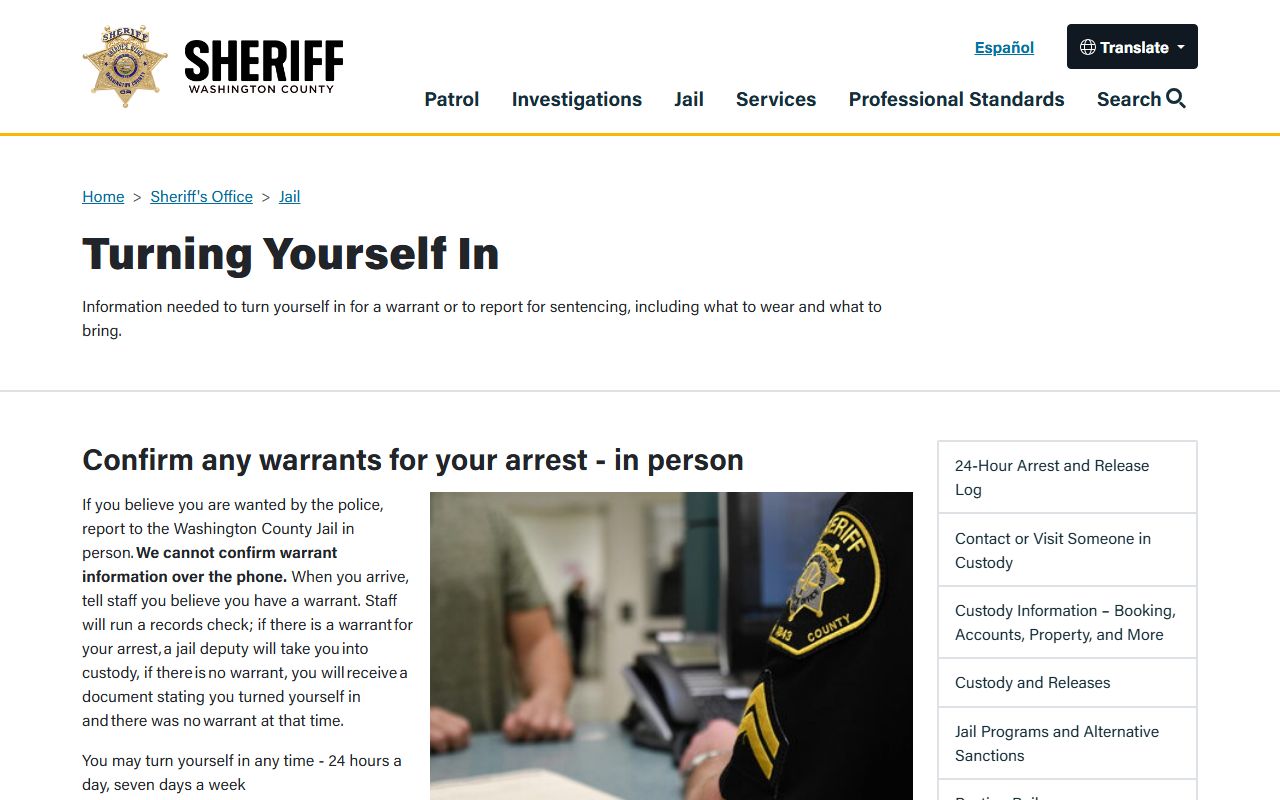
That page explains what to expect at intake when a person surrenders on a warrant.
Important: Talk to a lawyer or the court about appearance options before you turn yourself in, since counsel can address bail, hearing dates, and your rights.
Posting Bail or Security
Oregon and the sheriff use the word "security" for the bail amount that must be paid. When a warrant lists a security amount, paying it through the proper channel can secure release and a future court date. The sheriff publishes bail-posting instructions, and payment should only go through official sheriff or court-approved methods. After a warrant is resolved, give the system time to update, then confirm the court docket shows the recall, quash, or appearance.
The sheriff's bail-posting page explains the accepted methods and what the security amount covers.
Posting steps are on the Washington County Sheriff posting bail page.
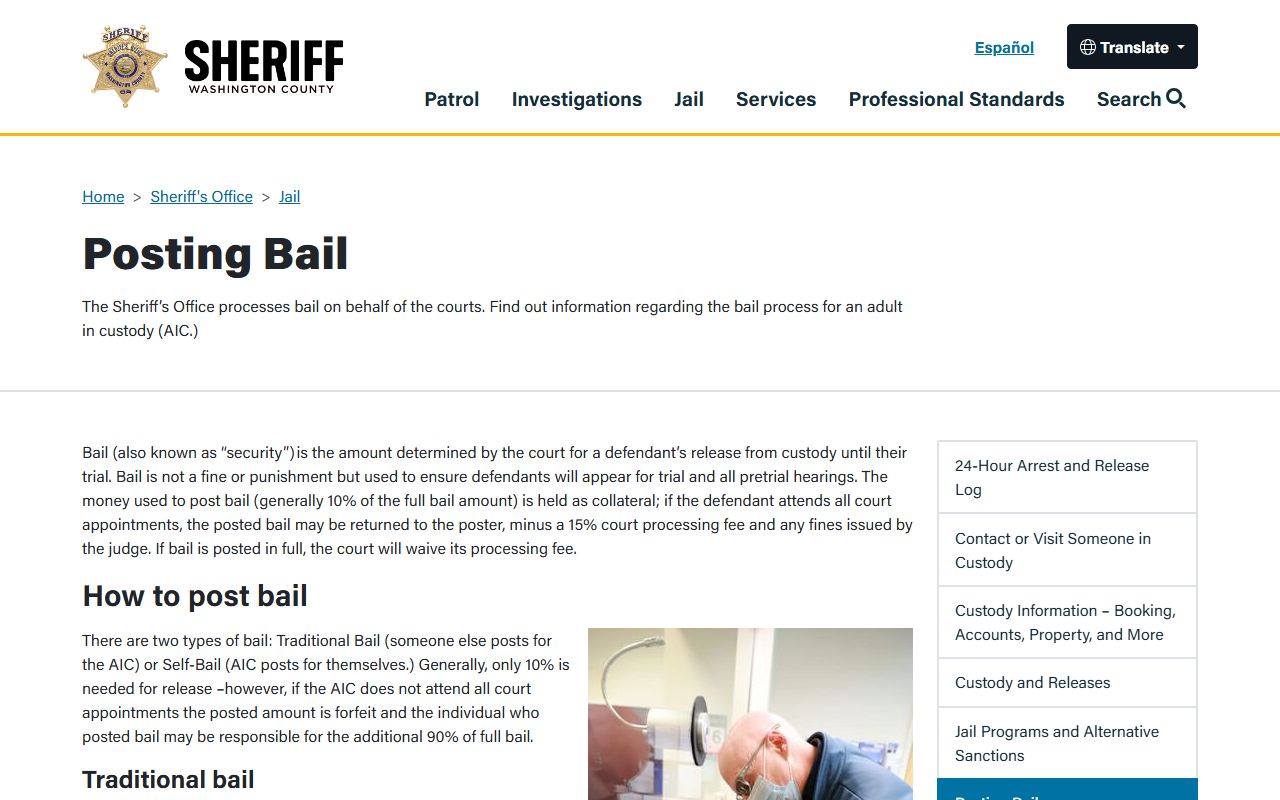
Use only the official methods listed there, since unofficial payment requests are a warning sign of fraud.
Warrant Phone Scams
Warrant and bail scams are common, and they prey on fear. A caller claims you have a warrant, then demands money over the phone to clear it. The Washington County Sheriff's Office warns the public that law enforcement will never ask for payment over the phone. A real court or jail does not collect a warrant fee by phone, gift card, wire transfer, or cryptocurrency.
Important: Law enforcement will never ask for payment over the phone, so hang up on any caller demanding money to clear a warrant and verify with the sheriff or court.
If you get such a call, do not pay and do not share personal data. Hang up, then check the official sheriff or court channels directly. Reporting the call to the sheriff helps protect others in the county.
Courthouse Visits and Security
Resolving a warrant often means a trip to the courthouse, and courthouse entry has rules. The court posts security guidance for visitors, including what items are barred at the entrance. Do not bring weapons or anything that looks like a weapon. Planning the visit in advance avoids delays at the door.
The court's security page lists entry rules for the Hillsboro courthouse.
Entry rules are posted on the Washington County courthouse security page.
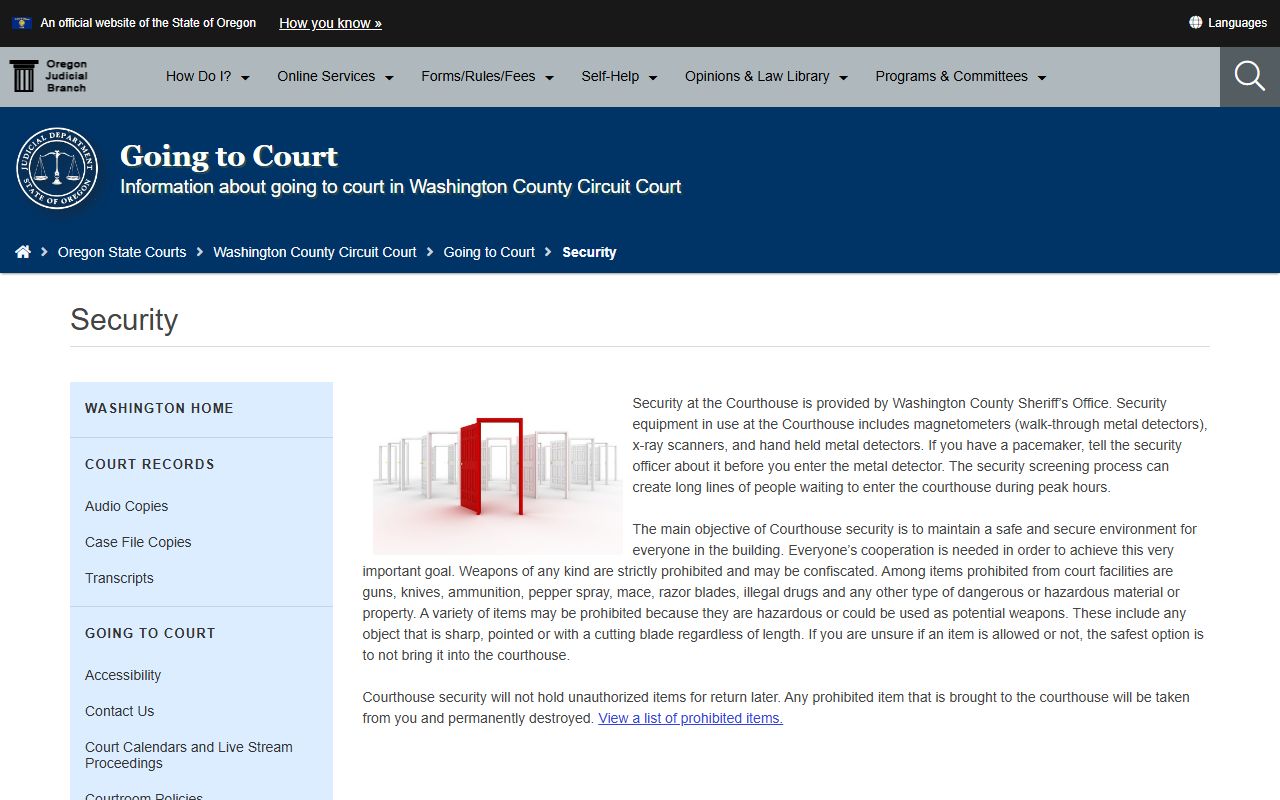
Review those rules before any hearing tied to a warrant so the visit goes smoothly.
Restricted Washington County Warrant Records
Some warrants are not public at all. Search warrants in active investigations are often sealed, so the public cannot view them until a court unseals them. Juvenile warrants fall under the juvenile confidentiality rules and are not shown in ordinary public searches. Federal warrants are handled by federal agencies and courts, not by the county sheriff, so they will not appear in county tools.
Sealed and confidential warrant material can stay closed even after a case is otherwise public. If you believe a warrant exists but cannot find it, that may be why. The court or an attorney can confirm status through proper channels when a public search comes up empty.